Designing the moment an operator decides whether to trust the machine.

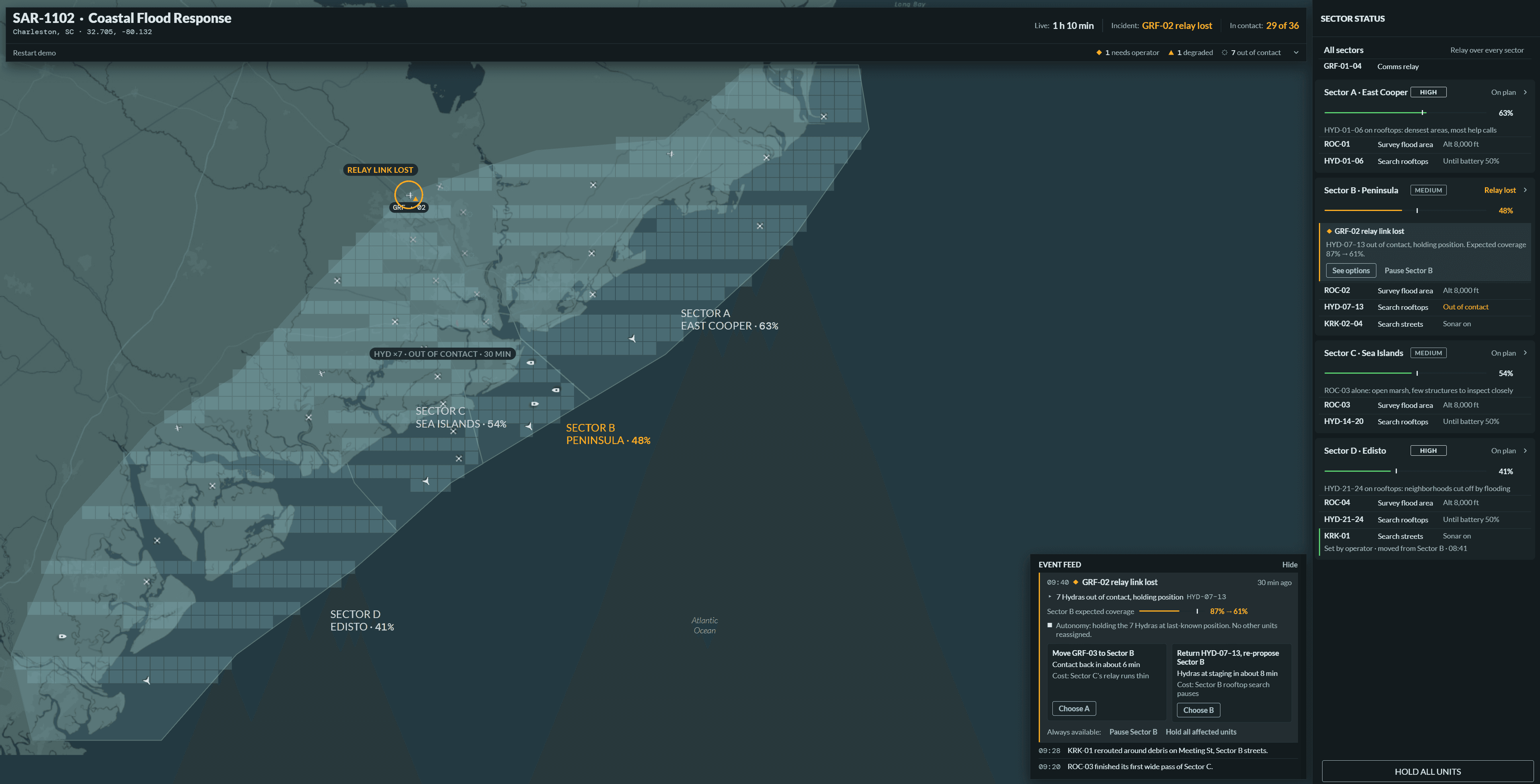
Health research, financial services, command-and-control autonomy.

I design it, build it, and ship it.

Selected projects

Some of the work I’ve shipped.

Shipped work · Rural health research

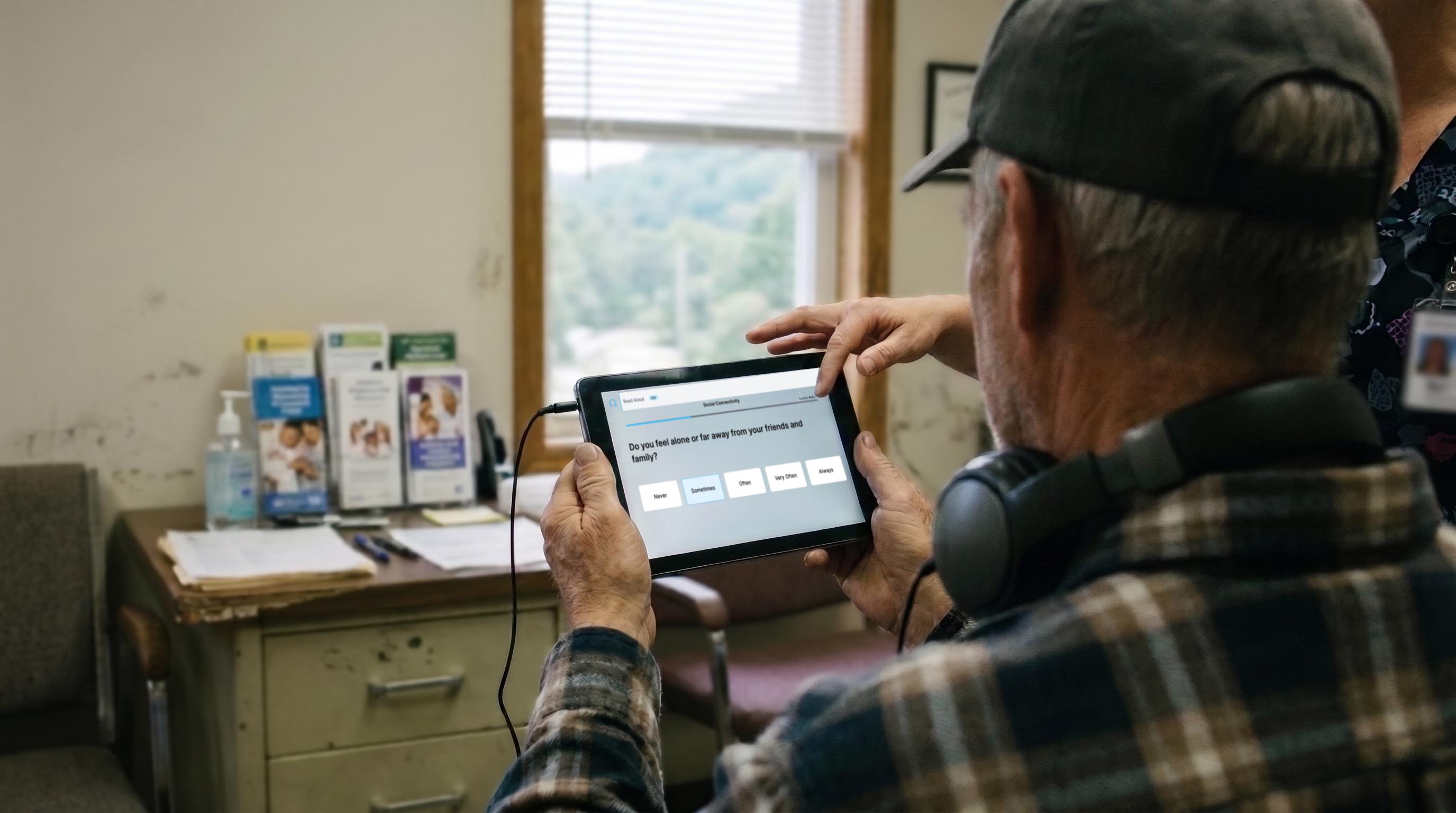
Field Guide: the directors blamed literacy, the paper said exhaustion.

An NIH-funded Pitt–WVU study in rural Appalachia. Participants traded health data for dental care, and the study was losing them to a 120+ question paper survey.

Rescheduled 23% → 0 · Data shared in 8 hours, not a week

Read the case study
A man in a plaid shirt and ball cap, wearing headphones, holds a tablet in a clinic office with a window, a filing cabinet and a brochure rack behind him. The tablet shows the Social Connectivity section of the survey: a “Read Aloud” toggle switched on at the top left, a progress bar, the question “Do you feel alone or far away from your friends and family?” in large plain language, and five response buttons reading Never, Sometimes, Often, Very Often and Always, with Sometimes highlighted. A second person stands at his shoulder.

Shipped work · Fintech

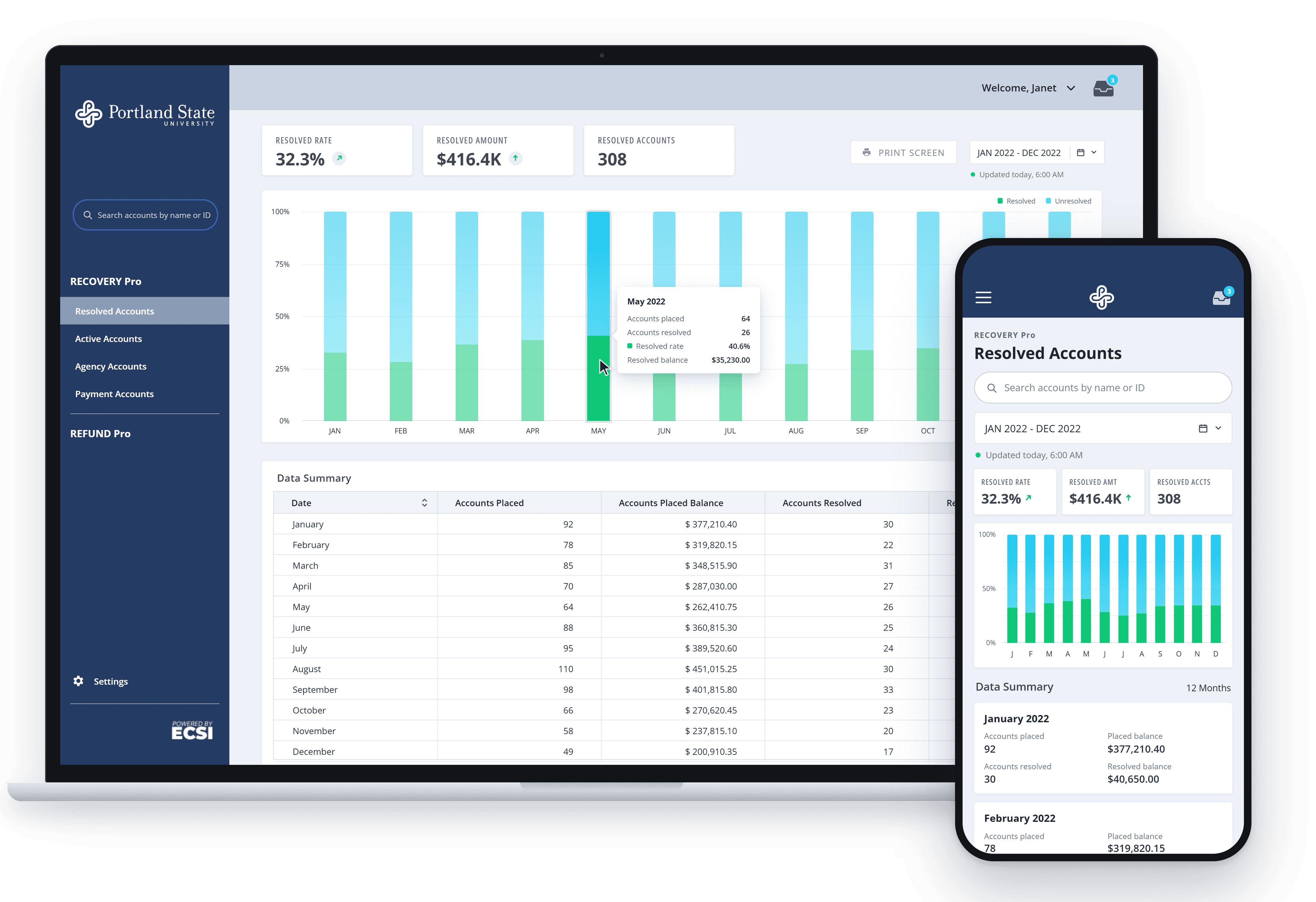
Financial Dashboards: the reprints revealed which five to build.

Clients ordered reports through a form and waited a day. The re-orders showed which five mattered; those became self-serve dashboards.

38% fewer support tickets · 20 staff hours a month back

Read the case study
A desktop dashboard and a phone side by side, both showing the portal’s Resolved Accounts view for Portland State University. The desktop view has three summary tiles — a 32.3% resolved rate, $416.4K resolved amount and 308 resolved accounts — above a twelve-month stacked bar chart, with a tooltip on May 2022 reading 64 accounts placed, 26 resolved, a 40.6% resolved rate and a $35,230.00 resolved balance, and a Data Summary table of monthly placements below. The phone shows the same view stacked: date range, the three tiles, the chart, then the first months of the summary as cards. The sidebar lists Resolved, Active, Agency and Payment Accounts under RECOVERY Pro, with REFUND Pro beneath.

Minding the gap.

In grad school I read about a radiation therapy machine that burned a patient, over and over, because the operator in the next room couldn’t see what the machine was doing. That idea has stayed with me: the distance between what a system knows and what the person responsible for it can see.

I’ve worked on it in a rural clinic, where the brief was one sentence and the answer took a month in the field. I’ve worked on it in regulated fintech, as the only designer on the product. Now I work on it in autonomy, where a wrong read costs more.

Somewhere along the way I started writing the gaps down. Calibrate is that library. Each pattern starts with a real failure and gives a structure for closing the gap that caused it.
Let’s talk
Leslie Johnson, smiling with her arms crossed, in a black shirt in front of a glass-walled building.