Autonomy doesn't remove the human. It changes the job.
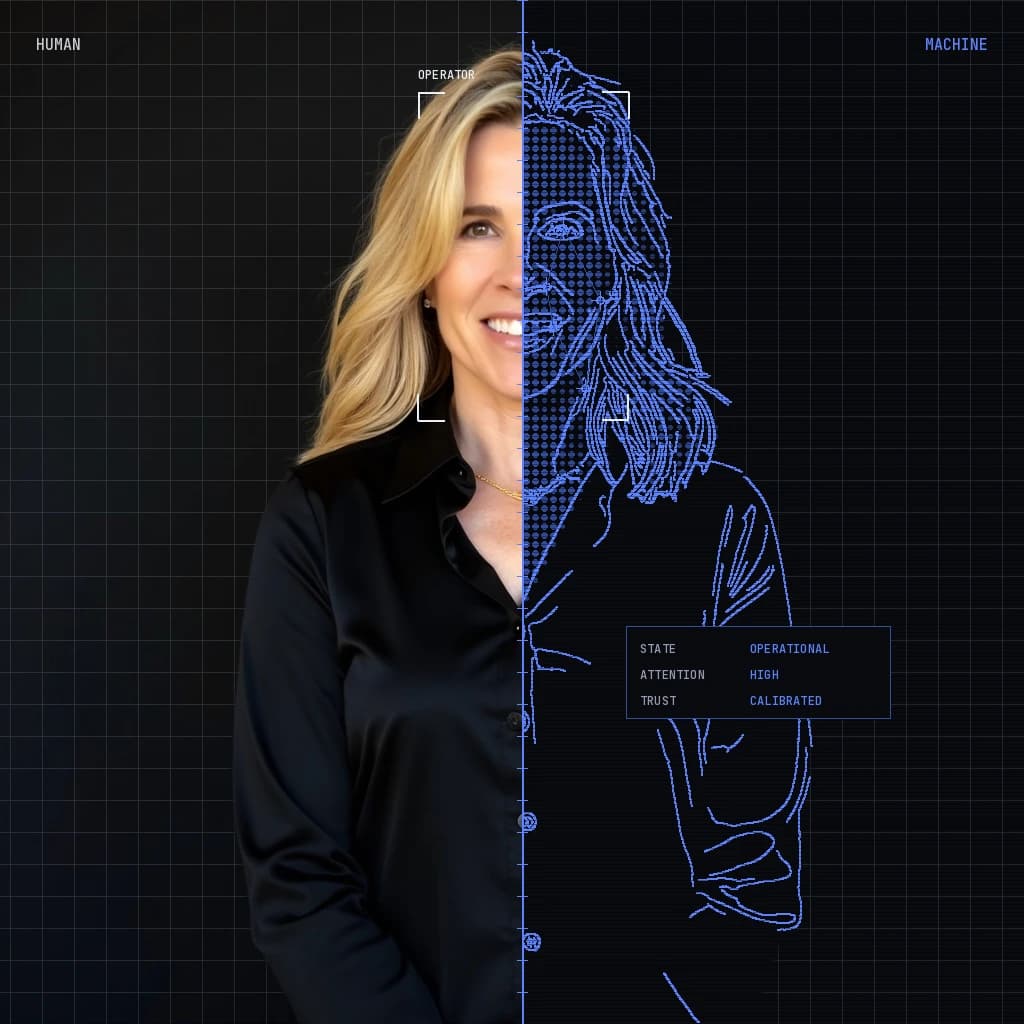
I design the trust layer between autonomous systems and the people who work alongside them. My work spans enterprise software, robotics, and physical AI, turning what a machine is doing into something a person can read, trust, and act on.
The problem I work on
Autonomous systems create a new kind of design problem. A person has to read what a machine is doing, decide whether to trust what it reports, and act, often under pressure and with incomplete information.
Most of these moments come down to a few recurring problems, and I design for each one by name:
- Handoff: when the machine yields control, how it signals that, and how much time the person gets to orient before they're in charge.
- Glass Box: the machine shows why, not just what, so the person can trust it or override it with context.
- Graceful Degradation: when the system can't do its job, it says so clearly, without panic or silence. Partial capability is still capability.
- Appropriate Friction: deliberate resistance before a high-stakes action. Here, friction is the feature.
- Shared Mental Model: what the person believes about the system matches what the system is actually doing.
Designing for how people think under pressure
Most intelligent systems are built around how engineers assume operators think, not how people reason under pressure. Closing that gap is where my second craft comes in.
Coaching and product design start with the same question: what is this person trying to do, and what's getting in the way? Years of design work and hundreds of coaching conversations have trained me to hear the problem beneath the problem, and to notice when my own assumptions are getting in the way.
What I bring
I think in systems.
I design the relationships between people, machines, information, and decisions, then look for where they'll break.
I design for behavior.
Interfaces don't just deliver information. They shape attention, confidence, and action. I design for cognitive load, calibrated trust, and decisions made under pressure.
I build and ship.
I frame the problem, form hypotheses, prototype, test, and iterate. I measure success by what changes, not by what launches.
I move work through people.
Good ideas only matter if they survive engineering tradeoffs, product priorities, and organizational complexity. I align engineering, product, research, and design around a shared understanding of the problem, and I grow the designers doing the work.
What's next
Physical AI is where software meets the real world. Drones, robots, and autonomous vehicles don't just produce information. They put people in situations where they have to act on it, with real consequences.
That's the work I want to lead next: setting design direction for human-machine interfaces in physical AI, building the teams that deliver them, and making the case for that investment with leadership.
If you're building autonomy that has to work in someone's hands, not just on a benchmark, let's talk.